What "IT infrastructure" actually means for a 10-person business
You already have IT infrastructure — domain, DNS, hosting, email, files, backups. You may just not know who owns it. What the term actually means at ten employees, and a six-question audit you can run this afternoon.
Lazar
Web Development & AI, Vertex Marketing
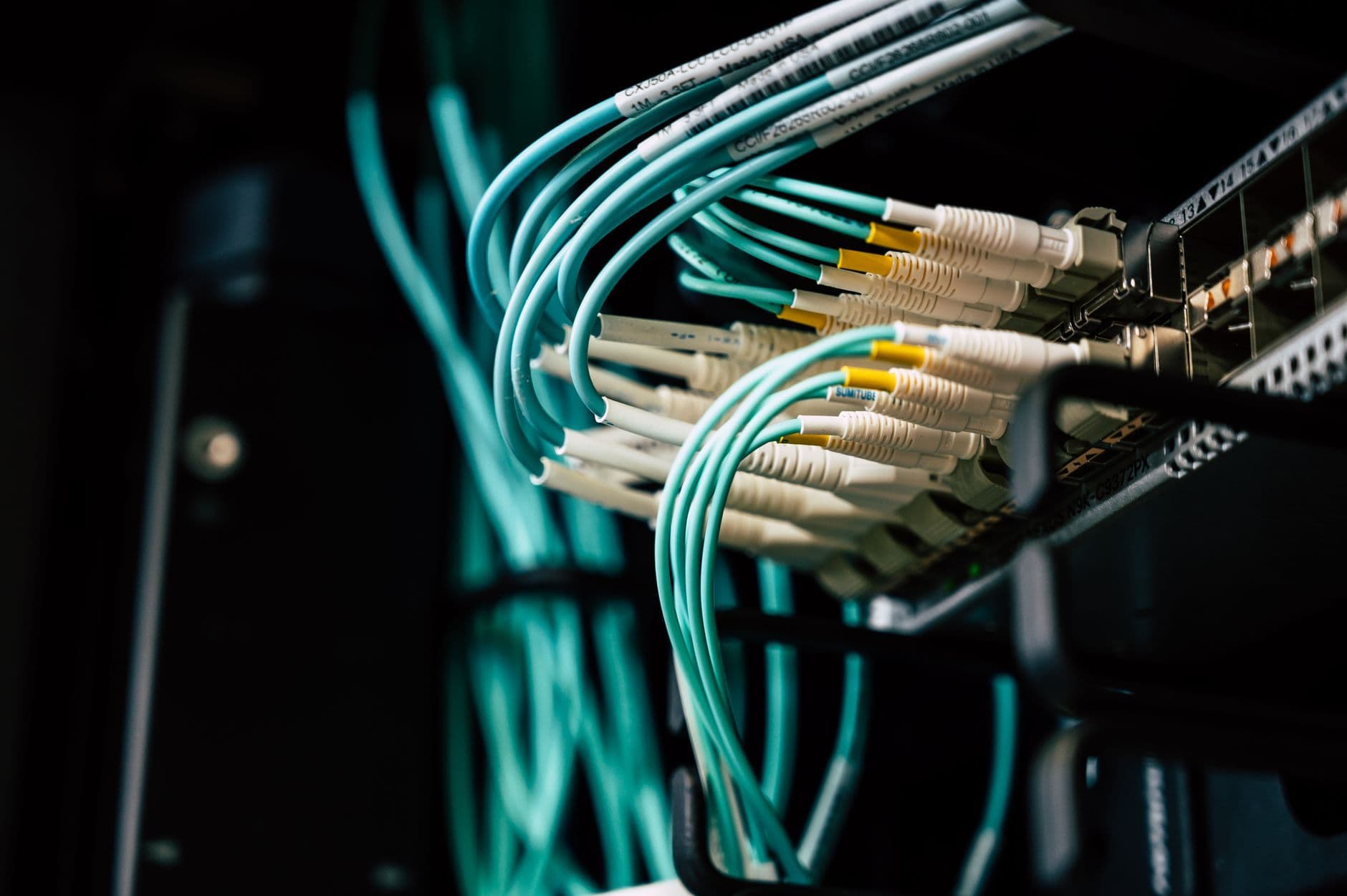
"IT infrastructure" sounds like something that belongs to a company with a server room, a rack of blinking lights, and a systems administrator on staff. Most ten-person businesses in Macedonia hear the phrase and reasonably conclude it is somebody else's problem.
Then the website goes down on a Friday afternoon. Invoices start landing in clients' spam folders. The person who registered the domain six years ago no longer works here, and nobody knows which address the renewal notice goes to.
If you employ ten people, you already have IT infrastructure. You did not design it — you accumulated it. Here is what it actually consists of, what it costs you when nobody owns it, and how to check yours in about an hour.
Infrastructure is six things, not a server room
Strip the terminology away and infrastructure is the list of things that must be working before your business can open in the morning:
- Domain — the name customers type, plus the registrar account that controls it and the renewal date attached to it
- DNS — the records that tell the internet where your website lives and which servers are allowed to send email as you
- Hosting — whatever serves your website to visitors
- Email — mailboxes, aliases, forwarding rules, and the authentication records that decide whether your message reaches an inbox or a junk folder
- Files — where contracts, designs, and invoices actually live, and who can reach them
- Backups — copies of all of the above that somebody has actually restored from at least once
Six items. A ten-person business usually has all six, spread across four or five providers, configured by three different people over six years, with half the passwords in one person's head. That is not a problem yet. It becomes one the day that person is on holiday.
The failures are quiet, not dramatic
At this size, infrastructure does not fail in a way that looks like a crisis on television. It fails like this:
- The domain renewal notice goes to an address nobody has opened since 2022, and the site disappears for two days.
- A shared hosting server picks up a bad reputation because of another customer on it, and your quotes start going to junk.
- The backup job has run every night for a year. Nobody has ever restored from it, so nobody knows it has been writing empty archives since March.
- A former employee's mailbox still forwards to their private address.
None of this requires an attacker or a disaster. It requires only that nobody owns the list. Every item above is cheap to prevent and expensive to discover late.
Email is usually the weakest part
Of the six, email is where I find the most damage — and the cause is nearly always three DNS records that nobody configured:
- SPF declares which servers are allowed to send mail using your domain.
- DKIM signs your outgoing messages so the receiving server can confirm they were not altered.
- DMARC tells receiving servers what to do when a message fails the first two checks.
Without them, Gmail and Outlook treat your mail as suspicious. You do not get an error. You get silence — and you conclude that the client is ignoring you. For a business that sends offers and invoices by email, that is a revenue problem wearing a technical costume. Setting all three up properly is an afternoon of work, once.
Overpaying and underpaying are the same mistake
Small businesses tend to land in one of two places. Either they are paying for a dedicated server, a corporate mail suite, and a support contract sized for a company ten times larger — or they are on the cheapest shared plan available, sharing an IP address with a few hundred strangers, with no backup policy worth the name.
Both come from the same cause: infrastructure bought once, under pressure, with nobody in the room able to judge what was actually needed. The right size for ten people is unglamorous, and usually cheaper than what they are paying now.
What "good" looks like at ten people
You do not need a data centre. You need boring, documented, and owned:
- One inventory document listing every domain, provider, access owner, and renewal date
- Business email on a real provider, with SPF, DKIM and DMARC passing
- Hosting that matches the site — for most business sites in 2026 that is a managed platform, not a VPS you have to patch yourself
- DNS at a provider you control directly (we use Cloudflare), not left with whoever built the last website
- Automated backups with one tested restore a year, written down
- Access that belongs to the company rather than to individuals — shared logins closed, admin rights on named people
That is the entire target. It is achievable in a week, and once it exists it needs roughly an hour of attention per quarter.
The audit you can run yourself this afternoon
Before you call anyone, answer these six questions in writing:
- Who owns the registrar account for your domain, and when does it renew?
- If your website vanished right now, who would you call, and do they have access?
- Send a test email to a Gmail address from your business account. Did it arrive in the inbox?
- Where is your website backed up, and when was a restore last tested?
- Which former employees still have working accounts?
- Which of the six items above has no named owner at all?
If you cannot answer three or more of them, you do not have an IT problem yet. You have an ownership problem, which is the one that turns into an IT problem later.
Where we come in
Start by documenting who owns each of these six areas, where the access lives, and when the next review is due. If the problem is unclear ownership, disconnected tools, or a team that cannot see what happens next, IT & Systems can help you establish a practical working setup.